School Psychology
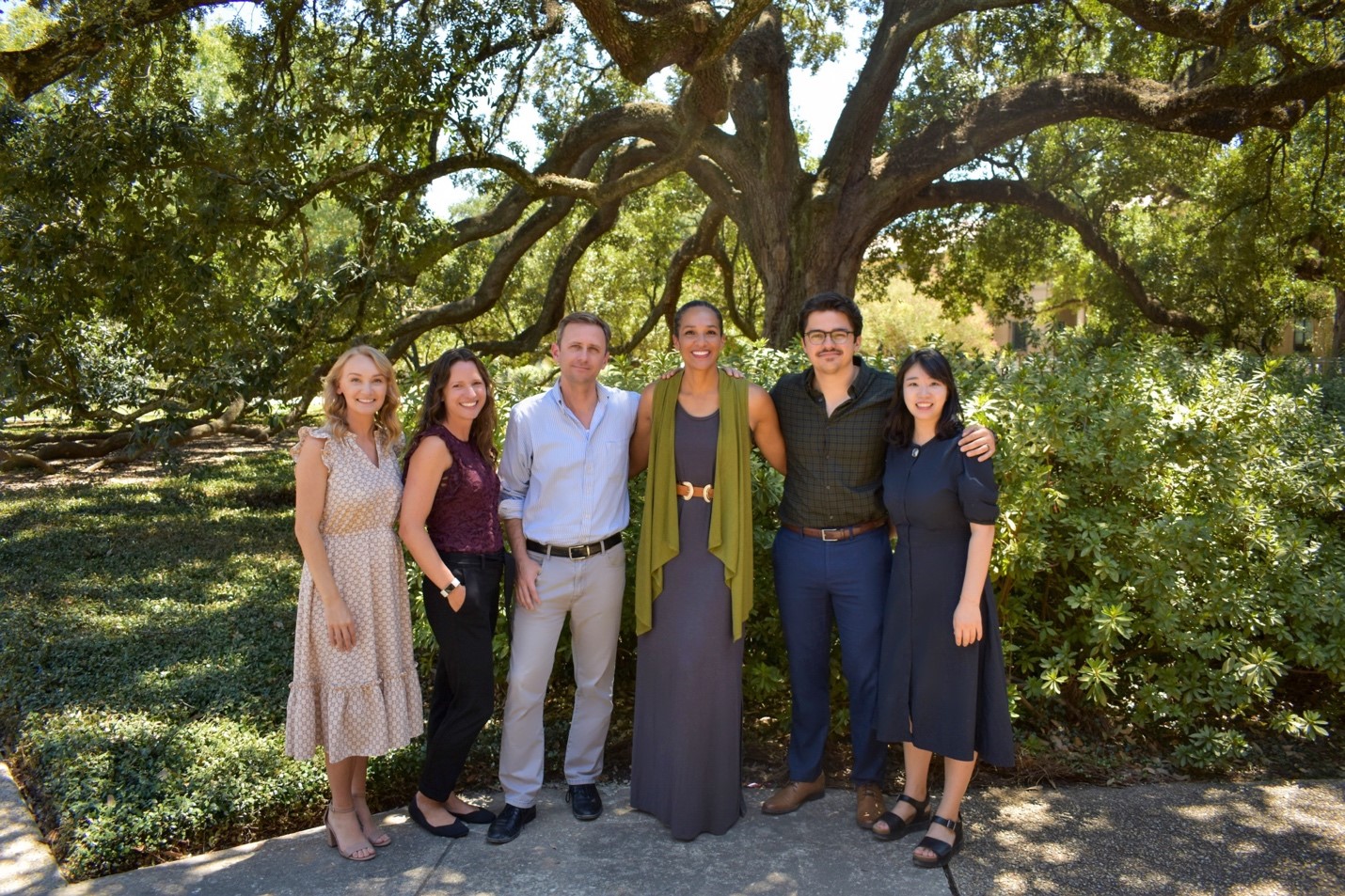
The School Psychology doctoral program at LSU is committed to training students to be leaders in education and psychology, who are effective at using scientific problem-solving techniques in both research and practice. The program strongly emphasizes the training of school psychologists who are agents of positive change, equity, and social justice in children’s lives. The development of consultation, behavior analytic, socioemotional wellness, and intervention/treatment skills are major foci of the program. Our training is designed to be sequential, cumulative, graded in complexity, and structured to prepare students for careers in academic, research, and applied settings. Compared to a master’s level or specialist degree, a doctoral degree in school psychology permits a broader range of career options in schools, early intervention settings, clinics, governmental agencies, and academia. In school systems, graduates typically hold leadership or administrative positions, depending on their interest. Because faculty and students are active in creating new knowledge through research, graduate students can expect solid evidence-based training incorporating the most recent developments in the field. Graduates of the program are recruited heavily by schools, hospitals, clinics, and universities.
Meet the Director
Dr. Shawn Gilroy*
Program Director/Director of Clinical Training, School Psychology
Program Objectives
- Graduates will use assessments that meet current professional standards for practice to guide diagnostic determination, intervention design, and to monitor the progress of clients they serve.
- Graduates will design and implement evidence-based therapeutic interventions that meet the needs of children, adolescents and families across educational and community settings.
- Graduates will be able to develop research studies using varied methodologies and analyses to answer research questions.
- Graduates will effectively communicate research methods and findings through scholarly writing and oral presentations.
- Graduates will demonstrate an understanding of legal, ethical, and culturally sensitive principles underlying the practice of school psychology and exhibit practice that is congruent with those principles.
- Graduates will demonstrate excellent leadership and organizational management skills.
- Graduates will demonstrate mentoring and teaching skills.
Training Model
- Behavioral and ecological systems orientation with a focus on children’s overall behavioral health
- Scientist-practitioner training approach
- Strong emphasis on consultation, assessment, and intervention skills
- “Hands on” approach in schools, clinics, hospitals, and institutions
- Individualized advising and supervision from faculty mentors in research and applied work
Program Highlights
- Fully accredited by the American Psychological Association's Commission on Accreditation (APA CoA; Education Directorate, Program Consultation & Accreditation; 750 First Street, NE; Washington, DC 20002; phone: 202-336-5979; fax: 202-336-5978; apaaccred@apa.org)
- Approved by the National Association of School Psychologists (NASP; 4340 East West Highway, Suite 402; Bethesda, MD 20814)
- Association for Behavior Analysis International (ABAI) Verified Course Sequence fulfills the coursework requirements for eligibility to take the Behavior Analysis Certification Board® examination
- Nationally Reputed Program: Among the top School Psychology programs in the USA based on research and publication activity
- Outstanding Research Productivity and Practical Experiences
- Faculty and students successfully obtain research and graduate training grants
- Faculty and students are committed to disseminating research via publications in peer-reviewed journals
- Diverse fieldwork experiences tailored to students’ areas of interest starting in the first semester
- Supportive & Accepting Learning Environment
-
- Culturally rich geographic location emphasizing the importance of competency and training experiences with culturally and linguistically diverse populations
- Faculty with expertise and a commitment to training in cultural and individual differences and diversity. The importance of this training is reflected in standards for accreditation developed by the American Psychological Association, such as Standard I.B.2. Administrative Responsibilities Related to Cultural and Individual Differences and Diversity (APA Standards of Accreditation)
- The program is also dedicated to fairness, equity, and justice in accordance with the National Association of School Psychologists Standards (NASP Professional Standards)
- Faculty actively promote the safety, mental health, and well-being of graduate students
- The program boasts a small student-faculty ratio of approximately 4:1
- Students are committed to supporting and working with peers to succeed within the field
Student Experiences at LSU
- Funding: Students are typically fully funded (graduate stipend + tuition remission) through
one of the following mechanisms:
- Externships at public, private, laboratory, and charter schools working with children, teachers, and parents
- Externships at hospitals and clinics, including Our Lady of the Lake, Baton Rouge Clinic, and Gulf South Autism Center
- Departmental teaching assistantships or graduate instructor positions
- Research assistantship
- Research Experiences
- Articles published in peer-reviewed journals, including the Journal of School Psychology, School Psychology Review, School Mental Health, and the Journal of Applied Behavior Analysis
- Research presentations at regional and national conferences, including NASP, APA, and ABAI
- Recipients of internal and external grants for research
- Clinical Experiences: Students can choose experiences in practicum offered by any School Psychology faculty, as well as several Clinical Psychology and Behavioral Analysis faculty
- Teaching Experiences: Teaching opportunities for PSYC 2000-level courses
Student Outcomes (2013-Present)
- 100% of students accepted to a paid, APA-accredited internship
- 80% of students graduated in 5 years
- Faculty positions at universities
- Applied and clinical positions at schools, hospitals, clinics (e.g., Marcus Autism Center), and state departments (e.g., Louisiana Department of Education)
Faculty Mentors






Faculty members * are accepting new students who are interested in completing both the School Psychology and Behavior Analysis programs. Students interested in completing both the School Psychology and Behavior Analysis programs such that they may pursue licensure as a psychologist as well as board certification as a behavior analyst should apply to their primary program of interest, listing their first- and second-choice mentors in that program, and indicate in their personal statement an interest in completing both programs. Please note, that students pursuing both programs may be required to spend one extra year on campus prior to the School-program-required internship in order to complete all coursework and practicum requirements for both programs.
Information about Licensure and Board Certification
Our program adheres to the APA accreditation standards as well as training guidelines outlined by the National Association of School Psychologists and the Association for Behavior Analysis International. Therefore, our program prepares students for entry into the profession of psychology and applied behavior analysis. Given the varied and changing requirements across jurisdictions, we cannot assure, nor is it our responsibility, that graduates will meet all requirements for licensure in all states or territories. You are encouraged to become familiar with state licensing laws and discuss your curricular plan with your faculty mentor and Director of Behavior Analysis Training.
Additional Information about Professional Licensures
Psychology licensure in the state of Louisiana
School psychology certification in the state of Louisiana
Licensure as a behavior analyst in the state of Louisiana
Psychology licensure in the United States and Canada
Anti-Discrimination Statement
We welcome applications from individuals across racial, ethnic, and/or cultural backgrounds. Baton Rouge is a culturally vibrant city, and our efforts in the greater Baton Rouge community enable us to provide clinical services and conduct research with individuals and communities representing a variety of backgrounds. We take immense pride in being a member of our local community. Furthermore, our program is dedicated to training that recognizes the significance of cultural and individual differences and diversity as a vital profession-wide competency (PWC) outlined by our accreditation standards (APA Standards of Accreditation). We value and respect the differences and similarities among people, and are sensitive to the multiple identities of students, staff, faculty, clients, families, and communities with whom we work and serve. We strive to facilitate healing and acceptance, communicate that everyone has value and adds value, and do not discriminate on the basis of race or ethnicity, color, national origin, sex, gender or gender identity, sexual orientation, culture, age, disability, religion, or socioeconomic status.
Further, as an APA accredited and NASP-approved doctoral program, the LSU School Psychology PhD Program strives to provide coursework, research, and clinical training activities in accordance with the standards for accreditation developed by the American Psychological Association and the National Association of School Psychologists, which require the totality of our training program:
- Ensure student competency in the ability to work effectively with individuals whose group membership, demographic characteristics, or worldviews differ with their own (APA Standards of Accreditation).
- All aspects of human diversity and social justice are recognized as strengths that are valued and respected throughout the school psychology program (NASP Professional Standards).
Thus, our commitment to expertise on diversity issues relevant to coursework, research, and clinical training enhances our service to all clients and communities, forming an integral part to our training mission.
Resources
School psychology curriculum map
STUDENT ADMISSIONS, OUTCOMES, AND OTHER DATA
School Psychology Graduate Student Handbook