

LSU Paths to PhD: Researcher Uses Digital Reef Models to Track the Spread of Coral Disease
May 07, 2026
This May, Gaby Carpenter is earning her PhD in Oceanography and Coastal Sciences at LSU’s College of the Coast & Environment, where she has studied the ecology of mesophotic coral ecosystems and the spread of coral disease.
Her dissertation, “Disease ’Scapes: A Multi-Scale Approach to Understanding Marine Disease Outbreaks in Stony Corals,” combines underwater field research with advanced computational modeling to better understand how coral diseases spread across reef systems and persist locally once established.
Did you know? Corals are actually animals. In fact, a coral colony is made up of hundreds to thousands of colonial animals, each one of which is commonly referred to as a polyp.
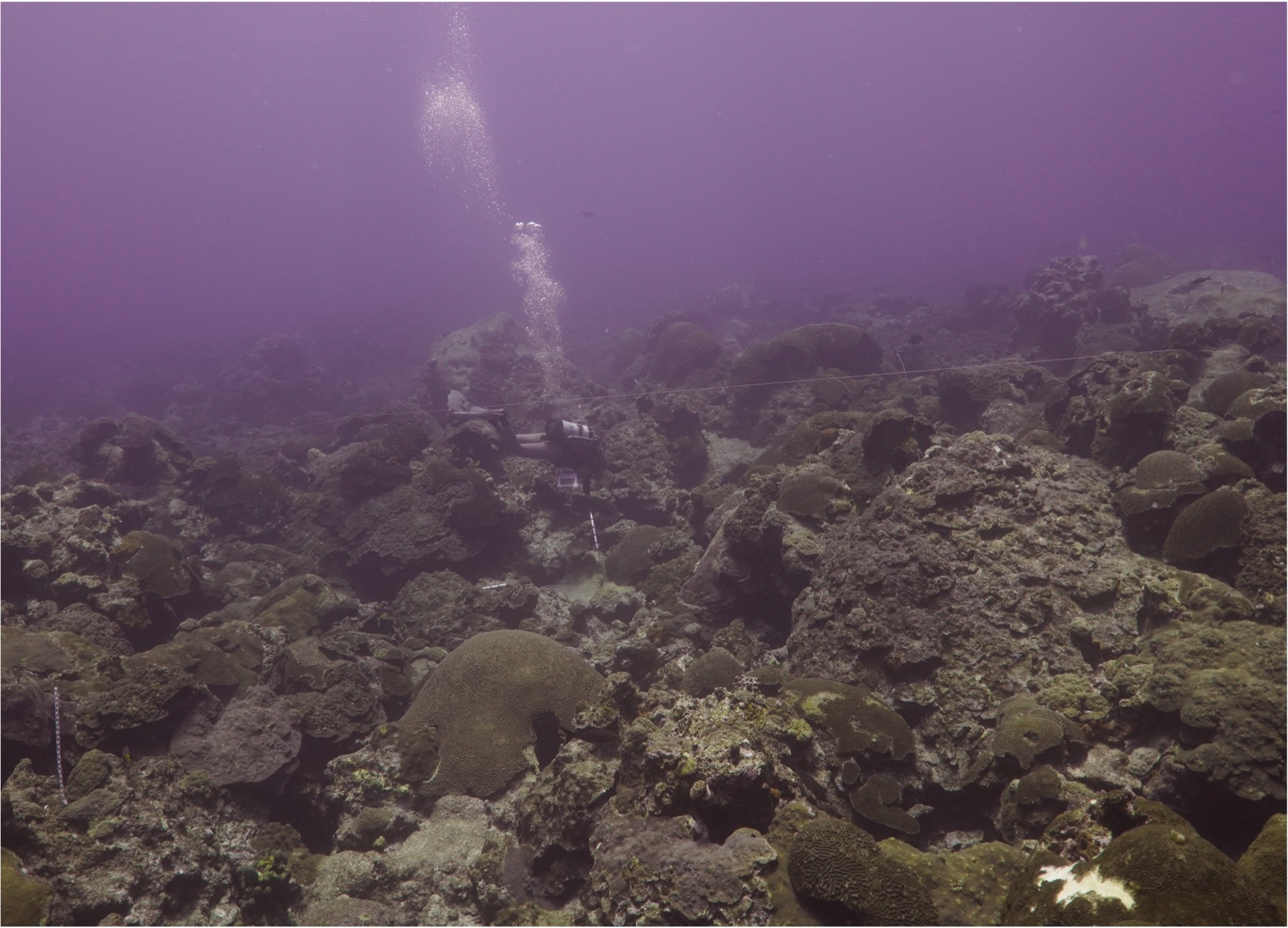
Carpenter said she spent a year scuba diving and volunteering with coral conservation groups, solidifying her desire to build a career studying reefs from beneath the surface.
– Photos provided by Gaby Carpenter
Carpenter earned her bachelor’s degree in environmental science and economics from Colby College and her master’s degree in marine biology from Northeastern University.
We asked her to share a bit about his doctoral research and experience at LSU.
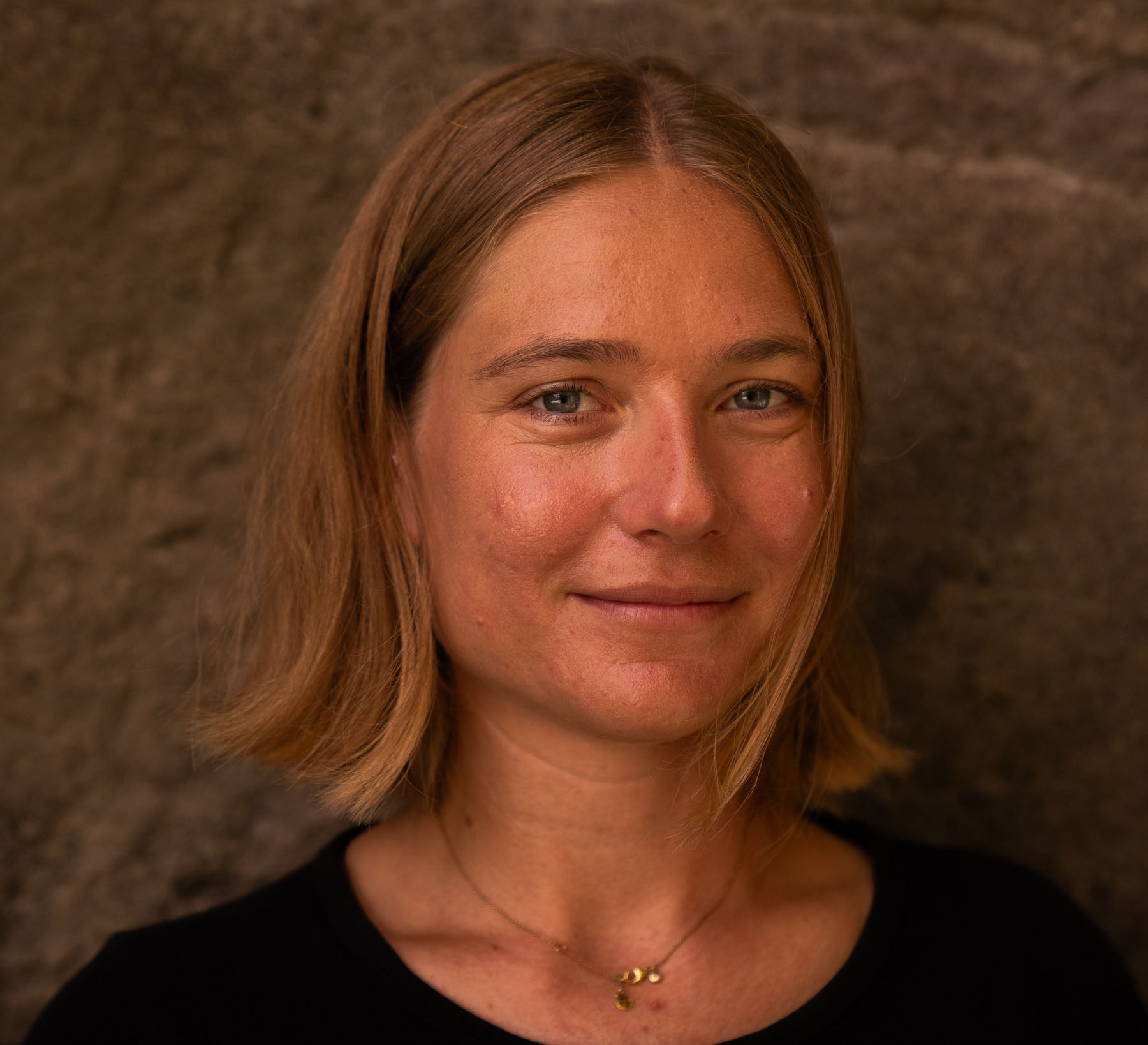
Gaby Carpenter
What interested you initially about your thesis research topic? How did you get into this topic and modeling coral reefs computationally?
I started my career as an environmental economic consultant, but quickly realized I wanted to be in the field collecting the primary data myself. This led me to take a gap year spent scuba diving and volunteering with coral conservation groups. Those experiences solidified my desire to build a career studying reefs from beneath the surface.
Ironically, while I now spend a significant amount of time analyzing data in front of a computer, my modeling work is entirely fueled by the time I spend diving and observing these ecosystems firsthand.
What is your favorite fun fact about your research project or topic (corals)?
Many people do not realize that corals are actually animals. In fact, a coral colony is made up of hundreds to thousands of colonial animals, each one of which is commonly referred to as a polyp.
Can you tell us more about making models of coral reefs, and how models help us learn more about and protect them?
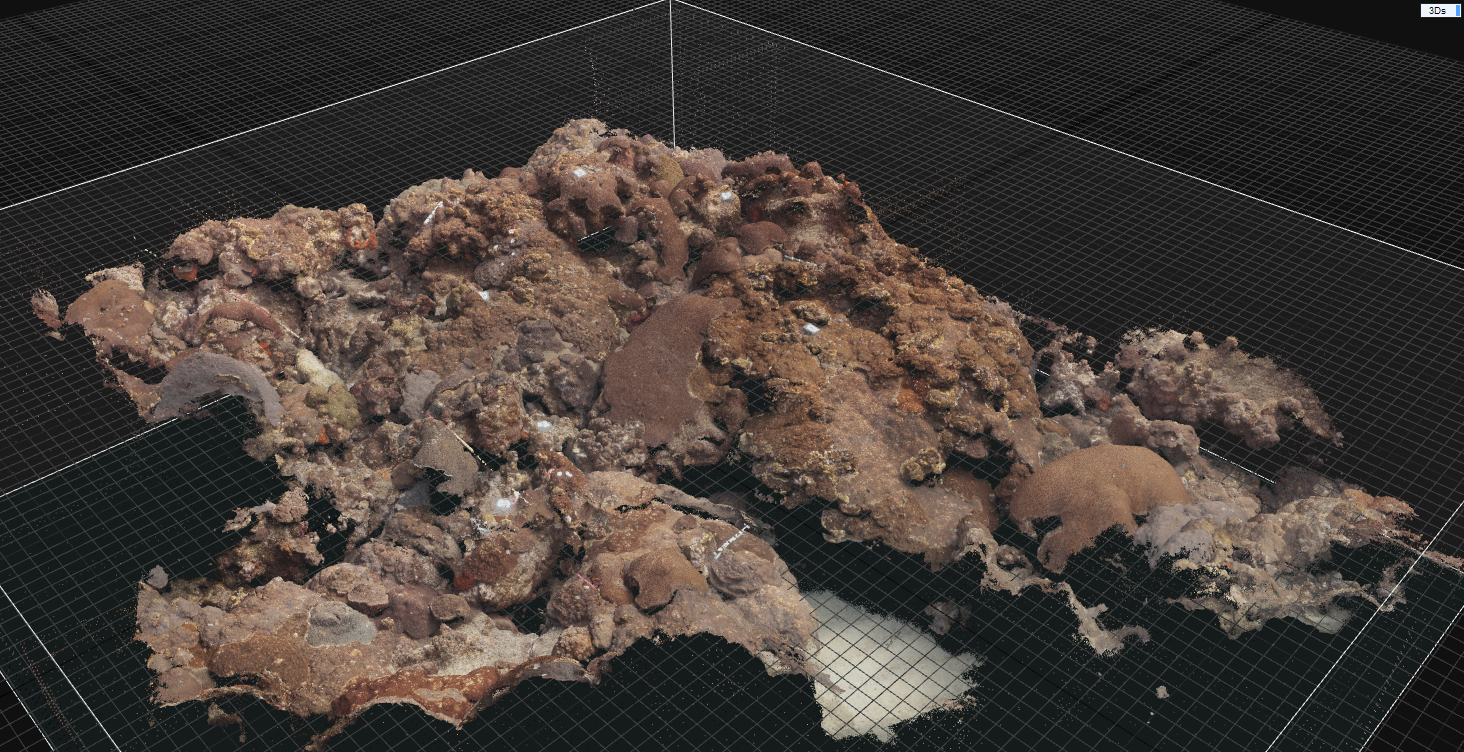
Computer model of coral
I create “digital twins” of coral reefs by collecting thousands of images underwater and stitching them together using specialized software. By doing this repeatedly over time, we create a record of how the reef is changing.
This allows us to create simulation models of the environment, essentially a digital sandbox. We can use these models to infer what happened between timepoints when we were not able to access reefs, explore intervention scenarios, and predict future impacts (although this is a future direction of my research and something I have not done yet).
Ultimately, these digital twins provide a risk-free environment to explore theories and potential mitigation efforts that may help increase reef resilience.
What were some of the biggest challenges in your project, and how did you overcome them?
The biggest challenge was the rapid pace of technology. During my five years at LSU, the software we used advanced dramatically. It is easy to overcomplicate a model by trying to make it match reality perfectly, but that isn't always practical or necessary. I overcame this by learning to set clear boundaries - defining exactly what the model needed to represent to answer our specific research questions, rather than just trying to keep up with the newest technology.
What were some of the most surprising or impactful things that you found or learned during your project? What are the implications of your findings?
The goal of my dissertation was to combine methods used across fields to study one problem – coral disease outbreaks. Through each one of my chapters, I investigated a coral disease outbreak at Flower Garden Banks (FGB) National Marine Sanctuary, which is offshore Galveston, TX.
My findings suggest that ephemeral, current dominated connections to distant coral reefs had the potential to transmit disease to (FGB), and that once established, the disease is maintained on the reef by local transmission. In the future, this may allow scientists to monitor currents and understand periods of high risk for this reef environment.
What are your plans after graduation? What will you take away from your PhD research experience at LSU?
I am starting a job as a coral scientist, contracting for NOAA. I will be analyzing and collecting data that is part of the National Coral Reef Monitoring Programs for reefs in the Western Atlantic.
My PhD experience taught me that I can master entirely new technical skills from scratch, even those I had no experience with before starting at LSU. I am excited to use the skills I gained to help protect reefs in the U.S.